.png)
The Changing Economics of Law Firms
%20(1).webp)
The financial structure of law firms during most of contemporary legal history functioned through a basic mathematical equation which determined its operations. The firm generated profits through increasing billable hours because lawyers charged clients based on their actual time dedicated to client work. The model maintained its dominance for multiple decades because it connected revenue generation with work performed while establishing a straightforward method to charge clients for legal assistance.
The business conditions that law firms operate in today have undergone major transformations during the last ten years. Corporate clients now expect cost transparency, predictable pricing, and faster service delivery. The competitive market now undergoes transformation because of technological advancements and the emergence of alternative legal service providers and in-house legal teams. The firms establish new methods to determine work costs and they need to establish productivity evaluation methods and operational frameworks.

Client Expectations Are Driving Pricing Change
The billing system which allows businesses to charge their clients without specifying their charges has become unacceptable to corporate customers. The unpredictable growth of legal expenses during extended legal proceedings or business transactions causes financial instability for companies. Before legal work begins, procurement departments and general counsel require legal service providers to establish precise pricing models.
The legal market has witnessed an increase in the adoption of alternative fee arrangements. Law firms now provide customers different pricing options which include flat fees and subscription-based legal services and fixed project costs instead of charging them only for hourly work. The two models enable clients to create their budgets with more precision because they need to control their expenses, while law firms must produce their work to meet their established performance standards.
Law firms show increasing interest in value-based billing, which uses billing according to provided value instead of charging based on time spent. The system establishes pricing which charges according to results achieved instead of time spent on work. A successful regulatory approval or completed merger enables the implementation of a fixed value-based fee which charges for the work required to complete the project.
Legal services for corporate clients now use alternative billing methods which compete with traditional hourly billing.
Operational Efficiency Becomes a Strategic Priority
As pricing pressure increases, law firms must focus on efficiency to maintain profitability. Traditional legal workflows require lawyers to spend more than 100 hours on manual document review work and research activities and case preparation tasks. Firms use technology plus process improvement methods to decrease time spent on various operational activities.
Legal technology platforms provide assistance for document analysis and contract review and case research and compliance monitoring activities. Automated tools can review thousands of pages of legal documents in minutes to identify patterns or potential risks which would take lawyers much longer to find through manual analysis.
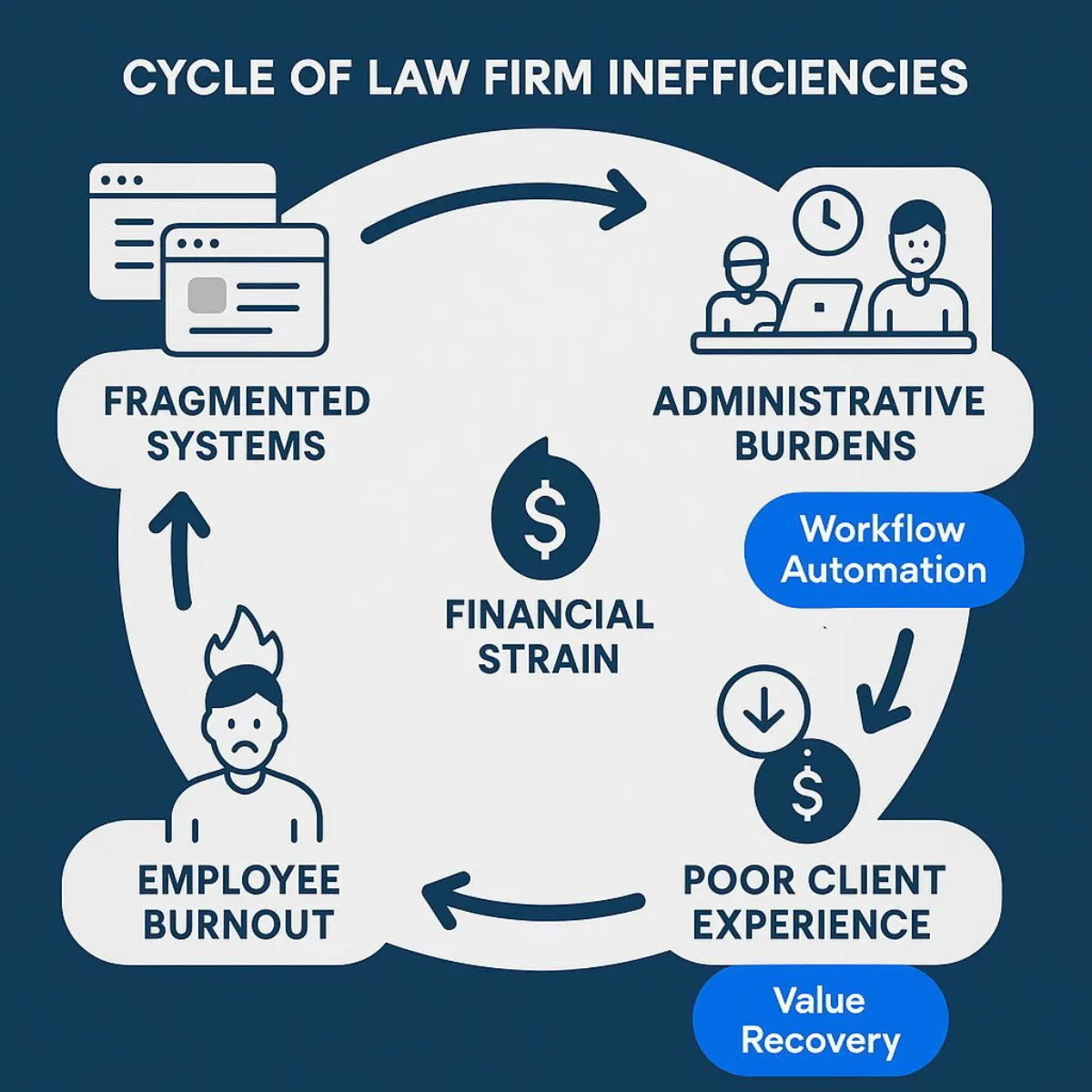
Businesses increasingly implement operational restructuring as standard practice. Some firms have begun to hire dedicated project management personnel who will manage all legal operational activities. These professionals coordinate tasks, manage timelines, and ensure resources are allocated effectively across cases.
Firms can sustain their profit margins through process enhancement because they can achieve price reductions requested by their customers.
Rethinking Compensation and Talent Models
The financial structure of law firms depends on lawyer compensation methods. Partner earnings used to depend on their ability to generate client revenue through billable hours. The evaluation system for associates required them to work extended hours because their performance depended on their yearly billable hours.
The evolution of pricing models will result in modifications to current compensation systems. Firms that test new fee structures tend to prioritize operational efficiency and teamwork effectiveness and customer contentment instead of measuring success through billable hours.
Conclusion
The financial system used by law firms will undergo major changes during its upcoming period. Clients seek three basic requirements which include transparent operations and efficient services along with predictable pricing. Legal work processes undergo complete transformation because of technological advancements. New business models from alternative providers create additional competition in the market.
The majority of firms are currently implementing three changes which include new pricing models and modifications to their payment systems and processes that boost their operational performance. The billable hour system remains essential to legal financial practices yet it has become one of multiple systems which now direct the entire industry.
Firms achieve successful adaptation by implementing a method that combines established practices with new innovative ideas. The combination of their deep legal knowledge and their understanding of contemporary business operations enables them to compete successfully in the constantly changing legal industry.
.webp)
%20(1).webp)